
Do Executives Really Need a Coach? The True Impact of Executive Leadership Coaching


Very often in life, we confuse concepts. If you are at the helm of a company, you have undoubtedly thought about how to become a true leader, rather than a boss, as depicted in popular illustrations, who wants the work done solely by the efforts of the team. Executive leadership coaching will help you identify the criteria and implement changes.
What is Executive Coaching (And What It Is Not)
Executive and leadership coaching is definitely not a magic pill that will suddenly make everything better. It is a comprehensive process that will require dedication and perseverance on your part. C-suite executives face unprecedented challenges, and working on themselves and unlocking their potential for effective leadership is one of the most difficult tasks. After all, this requires strengthening self-awareness and increasing the effectiveness of management decisions.
This can be achieved much more easily through a one-to-one approach and collaboration with highly experienced coaches. Executive coaching offers individual partnership that is entirely focused on helping you answer your own questions and contribute to your personal and professional development.
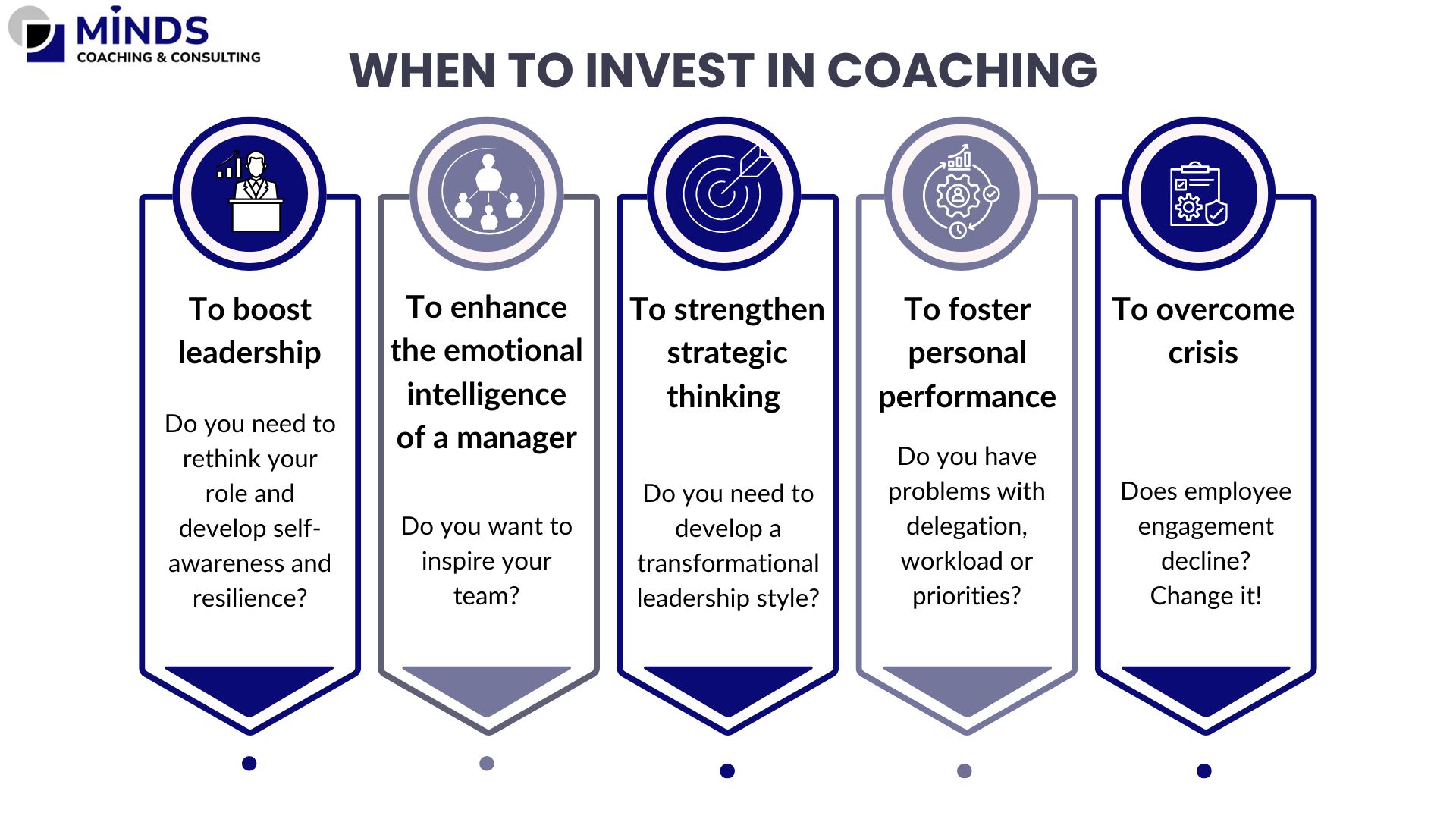
When to Invest in Coaching: Signs and Scenarios
From the description of what an executive coach does, it may seem that their functions are obvious. You may be sceptical about the connection between executive coaching and leadership development, but think about whether, even when you understand the theory and realise your mistake, you are always able to correct it and boost the company's high performance by putting all that theory into practice. Probably not, because then all the experts would be on the Fortune 500 companies list.
Goals and Benefits: What the Leader and the Organization Gain
Investing in executive coaching and leadership training has a measurable effect (ROI), which is assessed not only by financial indicators, but also by qualitative changes in behaviour and leadership culture. The leadership and personal development of a manager and the improvement of their leadership capability can be tracked by assessing various aspects. These can be monitored throughout the development programmes, and the results achieved can be compared. In addition to monitoring ROI, you can track changes in managerial behaviour, increased team productivity thanks to team coaching, and improved employee engagement levels.
Types of Executive Coaching
Business and executive coaching can cover many issues that arise for team leaders and those in management roles. Therefore, focus on finding the coaching solution that is right for you:
- business coaching;
- strategic;
- executive coaching for leadership development;
- leadership coaching.
5 Key Leadership Skills a Coach Can Help You Develop
The main skills that a coach can facilitate are communication skills, emotional intelligence, strategic thinking, the ability to manage change and maintain resilience to stress. As part of developing each of these skills, the coach helps the manager to better understand their own strengths, limitations and blind spots.
How Does the Coaching Process Work?
Coaching assumes that the goal for the session is set entirely by the coachee. The coach can help them realise and formulate their goals, but cannot impose their own understanding of what the person needs. Each session is a structured conversation during which the coach helps the client.
Between meetings, the executive implements new approaches in their daily work and reflects on them. The coach acts as a facilitator of development, not as an advisor. At the end of the collaboration, for example, with a leadership coach, the achievement of the set goals is evaluated. The ROI of coaching is calculated based on indicators of improved performance.
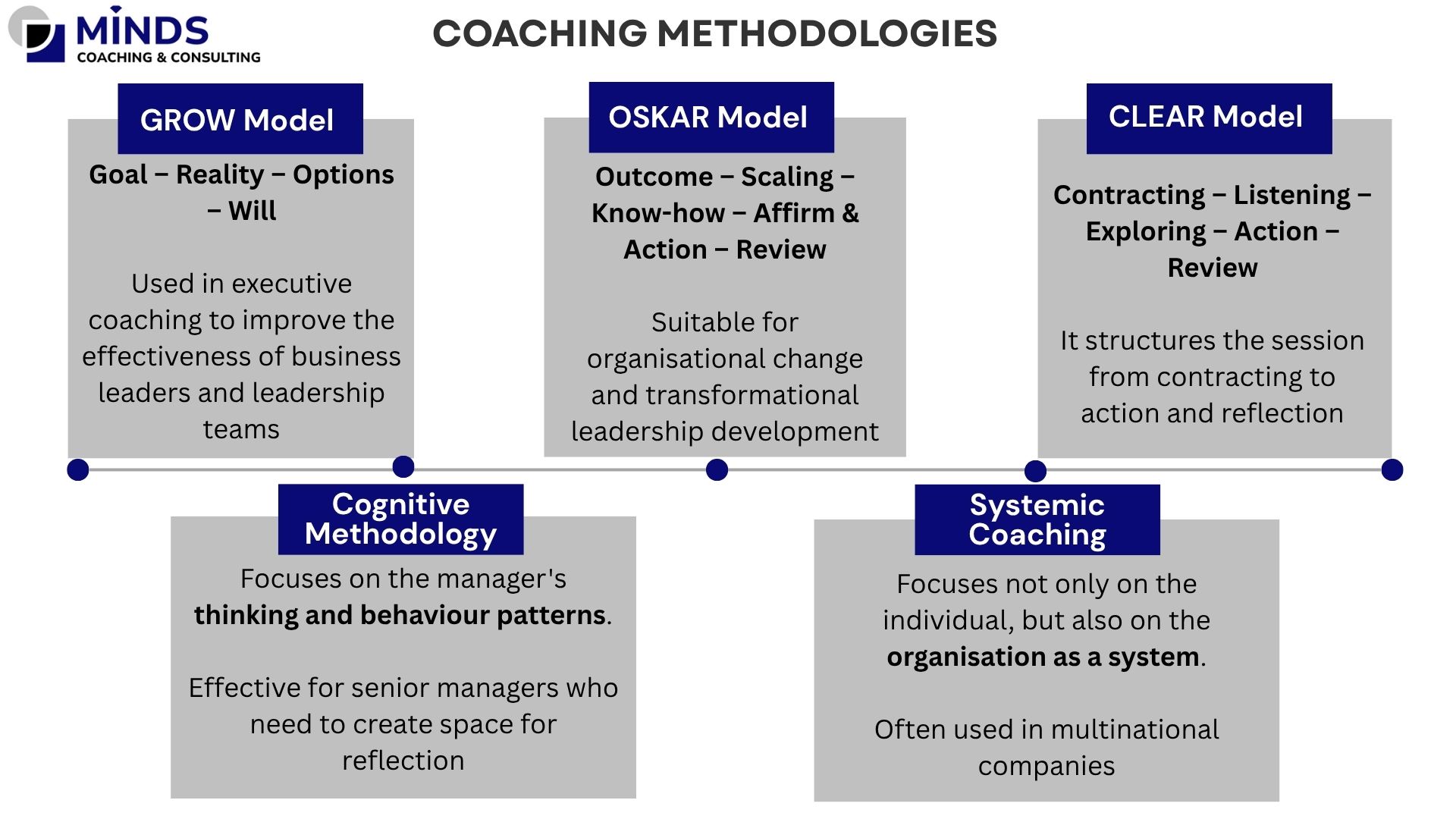
Coaching Methodologies
To ensure confident results for business leaders, coaches always thoroughly study the environment in which the company and the leader operate. This allows coaches to be certain that they are choosing the right methodology for a specific case within a leadership company.
Qualifications and Accreditation: What Makes a Coach a Professional?
Working with leaders means seeing things that even qualified CEOs and CFOs cannot see. That is why a professional must have more than just coaching skills and experience. A professional must have a diploma or certificates from programmes accredited by the Association for Coaching, the International Coaching Federation or other professional bodies (associations for coaching). Accreditation is official confirmation of a coach's level of expertise. According to ICF or AC standards, compliance with the Code of Ethics and coaching competencies is a mandatory element of a professional coach. These competencies involve interaction that is free of judgement, the desire to give advice or criticise.
Moreover, a world-recognised qualification is different than the accreditation process. As proof, an internationally recognised coaching qualification the ILM level 7 is a Masters equivalent.
How to Choose the Right Coach
It is important that the coach has business experience, so executive coaching for senior leaders, leadership teams or in multinational organisations would be relevant for business leaders who aim for big changes. The coach must have organisational vision and an understanding of management dynamics.
The right coach will have a positive impact on the entire company, so it is a strategic choice in which all aspects should be considered.
Potential Challenges and Pitfalls (When Coaching Doesn't Work)
This is time to think about your ambitions. Because there is a crucial condition for coaching to work. And many fall into the trap of misinterpreting coaching. A coach will not give you motivation and desire to act, so if you are looking for a source of energy, you must first find it within yourself. Also, be prepared to work continuously. Coaching is primarily about results, about actions that you are prepared to take outside of the session.
However, if you are determined to scale up and are looking for ways to expand your knowledge and master tools for the long term, coaching is the booster you need.


