

Organizational Culture: How Leaders Influence and Shape Growth



Think of something that is both a product of the interaction and relationships between your organisation's employees, linked by a common goal, and at the same time a factor that influences this interaction and organisational effectiveness. This unique phenomenon is organisational culture, which is above people – it guides and adjusts behaviour in accordance with generally accepted norms and company values.
What Does Organizational Culture Mean in Simple Words
Organisational culture is the foundation of your company and elements of organizational culture are the four walls of a building that support the rest of the company structure. So, organisational culture:
- is a set of unwritten rules that include communication style, attitude towards mistakes, and the importance of teamwork;
- the shared worldview of employees – the pursuit of innovation, customer focus, or employee support;
- determines interaction and behaviour within the team;
- is manifested in all actions of the organisation: from the office interior to the communication style of management and attitudes towards informal rules.
What Is Organizational Culture in Business
So what is organizational culture in business and what distinctive features does it have? Organisational culture in business has been redefined as one of the most important factors that is a stronger motivator, regulator and indicator of staff performance in an organisation. A process of transforming organisational culture can strengthen the organisation, predict possible directions for management decisions, contribute to the achievement of planned results and shape business success.

Why Organizational Culture Matters
Organisational culture is persuasive. It is in your best interest to make it a tool for attracting talent. If a skilled worker is faced with two offers, one with a higher salary and the other at Apple, the choice will not be in favour of money. This is because Apple organisational culture, built on creativity, innovation, collaboration, excellence and accountability, is more convincing than earnings.
Recruitment and Employer Branding
Employer branding is what makes your company a dream destination for top talent. Sometimes, an excessive focus on what appears to be the main part of recruitment – job sites and recruiters – prevents us from taking a broader view of what most influences the flow of talented candidates. In fact, a good employer brand can reduce hiring costs. Therefore, by investing in organisational culture, leaders can gain loyal team members and strengthen the image of the company in the market, which will serve as a tool in the future.
Employee Engagement and Retention
Another misconception, but this time regarding employee experience and motivation, is that high employee engagement is the result of financial incentives. However, if a company is facing problems with employee retention and talent shortages, it should not blame everything on salary or external circumstances. Instead, it needs to pay attention to what is happening in the interaction between managers and subordinates – the work environment and the company's mission and vision. Today, more than ever, core values matter. Therefore, in order to be successful in engaging and retaining employees, it is worth making a special effort to instil values that shape the workplace culture.
Business Performance and Innovation
The better the organisational culture, the greater the potential for innovation. A strong culture creates an environment where people feel safe, express bold ideas, are not afraid of mistakes, and are ready to innovate, leading to increased productivity, staff engagement, and a stronger competitive position for the company. Developing a culture conducive to innovation is a complex process that requires harmonising corporate culture with the organisation's strategic goals, as well as introducing open structures and new innovation management tools.
Work-Life Balance and Wellbeing
Work-life balance has become more important to employees than salary. Work-life balance and well-being are interrelated elements of organisational culture that promote harmony between an employee's professional and personal needs. Companies that support this balance through flexibility, setting boundaries and providing support promote employee wellbeing, preventing burnout and increasing job satisfaction.
Key Types of Organizational Culture
Types of organisational cultures are classified according to various criteria: depending on the basis on which the organisational culture is founded, depending on the level of study of the organisational culture, depending on the specifics of the perception of the organisational culture by the staff of the enterprise. For example, according to the latter criterion, the dominant organisational culture, the subculture of departments and groups, and the counterculture are distinguished.
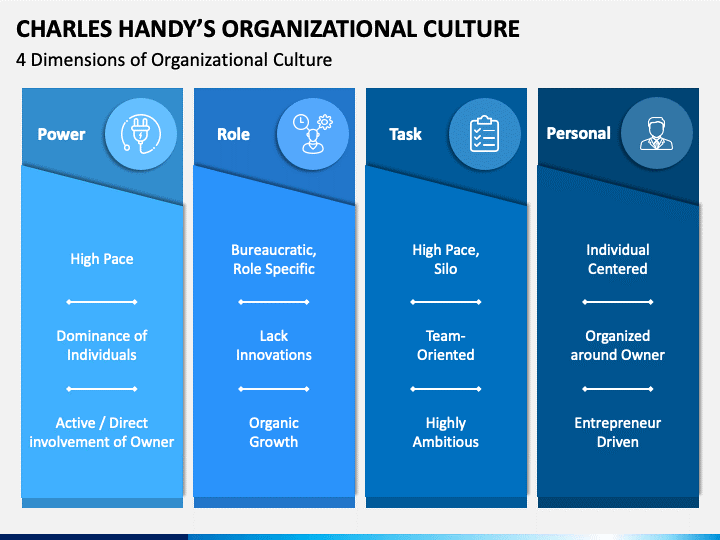
Of the many different concepts of organisational culture, the most successful and noteworthy is Charles Handy's model of organizational culture, which in his book ‘What is an organisation?’ identifies four template types of culture.
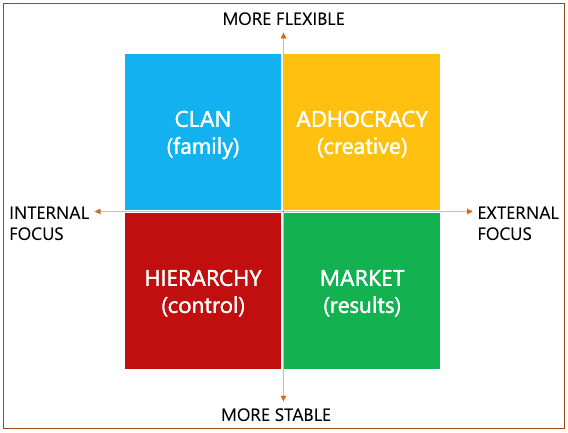
The 4 Classic Types (Cameron & Quinn)
K. Cameron and R. Quinn evaluate organisational cultures according to the following parameters.
- Key characteristics: principles of internal organisational relations and people orientation.
- Overall leadership style in the organisation.
- Management of hired employees.
- The binding essence of the organisation.
- Strategic goals.
- Criteria for success.
What are the four types of organizational culture? The four classic types of organisational culture are clan culture, adhocracy, market and hierarchy culture.
Modern Examples of Organizational Culture (Learning, Coaching, Purpose-Driven, Accountability)
Contemporary examples of organisational culture can be seen in companies that focus on learning, innovation, employee well-being, accountability, and creating a flexible working environment.
Microsoft actively engages employees in learning, Google guides rather than controls using coaching methods, Patagonia makes decisions in line with the company's environmental and social mission, and Netflix is based on the principle of ‘freedom and responsibility,’ so the company trusts its employees to make bold decisions.
Common Challenges in Organizational Culture
When implementing corporate culture, entrepreneurs may face a number of challenges. If goals and values are not clearly defined, employees may feel uncertain about their actions. The lack of open communication channels can lead to confusion and misunderstanding about new expectations. If the new culture is not consistent with other aspects of the business (e.g., HR policy), it can lead to internal conflict.
Toxic Culture: What It Means and Signs to Notice
A toxic organisational culture leads to reduced efficiency. It can take many forms and manifest itself in toxic optimism, isolation and suppression of personality. Communication within the team can be toxic and destructive, with values reflected only on paper, but not in reality. The worst thing is when there is no development strategy or unifying goal, which can be an obstacle to achieving the desired results.
When Culture and Brand Don’t Align
When a company's culture and brand are not aligned, it creates serious risks for both the internal climate and market reputation. Examples of such disconnects include situations where a company declares values but does not adhere to them. Instead, employees and customers see a discrepancy between words and actions – especially in a world of open communication and feedback.
Quiet Quitting and Burnout
Effective leaders recognise these signs early on: they review workloads and reinforce a culture of recognition, openness and psychological safety. A coach can play a significant role here, helping both employees and managers to identify the causes of burnout, restore balance, find motivation and build a healthy system of priorities.
Remote and Hybrid Work Gaps
The transition to remote and hybrid formats has changed approaches to communication, management, and corporate culture – but at the same time, it has opened up a number of gaps that companies need to fill in a timely manner. In this case, coaching helps leaders develop new management skills – building trust at a distance, delegating effectively, supporting the team emotionally, and creating a culture of responsibility even without physical presence.
How Leadership Shapes Organizational Culture
Organizational culture and leadership are inextricably linked. Organisational culture cannot arise on its own. Leadership is very important in shaping the character of your organisation's culture, especially in shaping the overall spirit. Leadership involves responsibility for determining how the team works, planning working hours, balancing work and personal life, the physical environment within the workplace, methods of communication and transparency, and clearly explaining the team's responsibilities to them. Accordingly, leadership shapes organisational culture primarily through the behaviour and values of the manager, who becomes a role model for subordinates.
How to Improve Organizational Culture
There is no single guideline on how to create the perfect organisational culture, because it is not a technical issue. Regular assessments and monitoring of key indicators to identify new opportunities for improvement will help to enhance organisational culture. However, it is important that these innovations and improvements are guided and continuously supported by the leader. Organisational culture must adapt to changes in the external environment, as it is the flexibility of the market and management trends that have strengthened the role of organisational culture as such.
Define and Communicate Core Values
Every company has values, beliefs and culture, even if they are not documented, displayed on posters in the office or announced at meetings and official conferences. However, values should be the foundation of a company's culture and HR policy. This is an effective tool that is a significant motivating factor for employees in achieving both personal goals and the company's strategic goals. Examples of company values that will ensure development include:
- customer
- professionalism
- team
- development
- innovation.
Values and vision should reflect the uniqueness of the company and correspond to its strategic goals. It is important that they are not just a declaration, but real principles that the company adheres to in its daily activities.
Foster Transparent Communication
A culture of trust and open communication creates a solid foundation for cooperation between employees and management. Transparent communication for organizational culture involves open and honest information sharing that promotes trust, engagement, and better performance. It helps employees understand strategic goals, see how their work contributes to the company's success, and feel involved, which reduces conflict and increases productivity.
Invest in Learning and Development
Training and development are important aspects of implementing organisational culture. They provide employees with the knowledge and skills necessary to uphold the company's values. The company should develop and implement training programmes that focus on the company's core values and their practical application. This may include training sessions, seminars, and online courses. To deepen cooperation between employees, consider introducing mentoring programmes in which experienced employees help new team members adapt to the corporate culture.
Recognize and Reward Employees
Establishing a corporate culture is an important step in creating a sustainable business environment. Introducing a system of rewards and recognition that supports behaviour consistent with the company's values is a vital aspect of organizational culture. For example, this could include rewards for employees who make a significant contribution to the development of the corporate culture. Employees who feel that their work is valued become more efficient and invest more in their work. When employees feel that their ideas and worldview align with the company's values, their overall job satisfaction increases.
Enable Employee Voice
The opportunity for employees to express their opinions fosters innovation, generates new ideas, enables rapid response to change, and ensures stability and competitive advantages in the market. The opportunity for employees to express their opinions in the organisational culture is realised through open channels of communication, a culture of feedback, involvement in decision-making, and a system of encouraging ideas. This creates a culture where employees feel comfortable and are more confident in making decisions.
Build Connections and Diversity
Employee diversity creates a variety of ideas, but requires a strong culture to integrate them and communicate effectively. The relationships between employees and their diversity influence the culture, while the culture itself determines how these relationships will develop and how diversity will be perceived. Employee diversity can enrich a company's culture by bringing new ideas and perspectives. However, without clear rules and values, it can lead to conflict and misunderstanding. Effective diversity management requires a strong organisational culture that promotes inclusiveness, respect and tolerance for differences. Culture acts as a connecting link that unites employee diversity, allowing them to work together effectively.
Start Culture from Day One (Onboarding)
It’s crucial to understand how to create an organizational culture for new employees. The first step is to familiarise them with the company's history, mission and vision, as well as to demonstrate corporate values in everyday behaviour. A leader must set an example by demonstrating behaviour that is consistent with the corporate culture. It is important to create a sense of belonging, explain expectations and ensure that every process, from day one, is consistent with the established culture. It is important to create an environment where employees are more likey to feels that their development contributes to the development of the company, and the company, in turn, contributes to their personal growth.
Prioritize Mental Health and Wellbeing
More and more organisations are turning their attention to the issue of caring for the mental health and well-being of their employees. Employee well-being is part of the overall organisational culture, without which no developed company can exist today.
The main elements of human well-being are:
1. Career
2. Health
3. Finances
4. Social connections
5. Community connections
Mental health and well-being are the foundation of a healthy organisational culture, which involves creating an environment where employees can realise their potential, cope effectively with stress and work productively.
How the Right Coaching Helps Improve Organizational Culture
Coaching help new and existing employees adapt to the organisational culture and realise their potential. The right coach helps improve organisational culture by developing leadership skills, increasing employee awareness and effectiveness, promoting better communication, and reinforcing organizational values. It creates a positive workplace where employees can independently find solutions and develop their individual personalities, which has a positive impact on the overall atmosphere and productivity. Coaching helps managers develop emotional intelligence, strategic thinking, and transformational leadership qualities, which has a positive impact on the entire organisation.
The right coaching for organisational culture is based on the principles of trust, empathy and responsibility, implementing coaching methods at all levels of the company to develop a shared vision, transparency, mutual respect and adaptability. It involves not only working with managers but also training all staff to make coaching part of daily interaction, promoting continuous learning and goal achievement.
Organizational Culture FAQs
Frequently asked questions about organisational culture concern its essence, impact and elements.
Why is organizational culture important for a company?
A company's success often depends not only on its products or services, but also on its corporate culture. Culture determines how employees feel at work and what results they are capable of achieving. Corporate culture can be called the company's ‘DNA,’ which indicates its uniqueness and helps determine how its employees perceive and interact with each other and with customers. It influences how employees are recruited, how their motivation is increased, and how staff turnover is reduced.
How can leadership influence company culture?
Leaders are the primary bearers of company values. Their daily behaviour sets the tone for all employees. Leadership influences company culture through establishing values, communication, and behavioural examples, creating a work environment that can be motivating or toxic. Shared values and support contribute to greater employee engagement and enthusiasm. Without a leader’s attention, corporate culture can become toxic, negatively affecting employee productivity and motivation.
What does a good organizational culture look like?
Organisational culture includes core values and principles, vision and mission. The company's values should reflect not only the current culture but also its vision for the future. Core values may include concepts such as honesty, innovation, openness and respect for employees. Vision and mission help shape the long-term perspective for business development. Vision is an ambitious, clearly defined goal that the company sets for itself for the next 10–15 years, while mission is the definition of the company's short-term goals.
Can organizational culture change?
Organisational culture is capable of adapting to new conditions. Changes can occur naturally over time or be implemented deliberately through changes in employee behaviour, leadership, management systems and company structure.
It is influenced and determined by people's behaviour and the values they adhere to. In addition, it can also be influenced by certain rules and attitudes. In general, each of us can influence culture and participate in its formation.
What are examples of organizational culture?
As for distinct organizational culture examples, Google, Netflix and Apple are well-known companies with strong corporate cultures. What makes their organisational culture successful?
- Google values innovation, openness and teamwork; creates an environment for creativity, supports talent development and flexibility at work.
- Netflix combines freedom with responsibility, encourages independence in decision-making and problem-solving.
- Apple focuses on innovation and excellence, stimulates workers to collaborate and be creative through the exchange of ideas.
These are environments where employees are more likely to perform in such a way that things are done uniquely and open-mindedly.
How do you measure organizational culture?
To determine organisational dynamics, it is important to use metrics that allow you to assess its impact on important factors in the company's functioning. An effective assessment tool is conducting surveys to collect data on employee satisfaction, their opinions about the organisation’s culture, and possible insights for improvement. It is worth introducing specific indicators that help assess the extent to which the culture helps achieve the company's strategic goals.


